

Blog
Backing Out Without Scraping: 8 Driveway Checks

If your car scrapes while backing out, first work out where it touches: the curb at the street, a sharp change in driveway slope, or a low part of the vehicle. Slowing down gives you more time to stop, but it cannot create clearance that is missing.
A driveway curb ramp can help at a compatible rolled curb. It cannot promise a scrape-free exit for every vehicle or fix a crest farther up the driveway. Use these checks to decide what needs attention before buying a ramp or changing your car.
Table of Contents
Eight checks before you back out
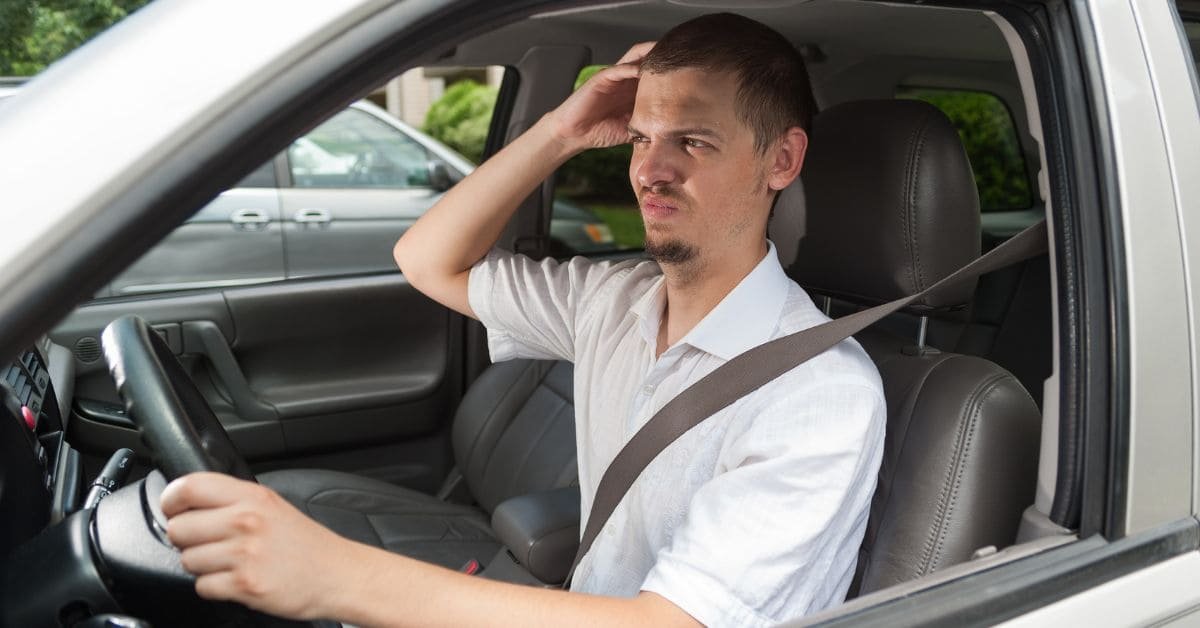
1. Identify where the car makes contact
With the car safely parked, look from outside for existing marks on the curb, pavement and accessible lower bodywork. Note where and when the scrape happened on earlier trips. Do not repeat contact just to identify it or crawl underneath a vehicle in the driveway.
A bumper overhang, a part between the wheels and a low exhaust component can meet the pavement at different points. A single ground-clearance measurement does not describe the whole crossing.
2. Plan a path with room to see and stop
Walk around the car and check the driveway and sidewalk before reversing. Keep children, pets and bystanders clear, and keep looking as you move. NHTSA’s backover guidance explains why a walk-around and continued observation matter even on a familiar driveway.
Use mirrors and direct observation as well as any camera. NHTSA describes a backup camera as an aid, not a replacement for looking. Do not use the sidewalk, landscaping or an adjacent traffic lane as extra maneuvering room to avoid a scrape. There is no single diagonal approach that suits every driveway; follow any specific guidance in your vehicle’s manual.
3. Check low or loose bodywork
Look for a low spoiler, splitter, hitch or hanging trim that may be the contact point. Adding a spoiler lip does not raise the car or solve a clearance problem. Have loose or damaged pieces assessed rather than treating repeated scraping as normal wear.
4. Notice changes in the vehicle
If a driveway that used to work has become a problem, consider what changed: passenger or cargo load, tires, ride-height settings, suspension work or visible damage. Follow the vehicle’s load and tire-pressure instructions. Do not overinflate tires or alter suspension components as an improvised clearance fix.
New vibration, pulling, unusual noises or visible wheel damage after a curb strike need a vehicle assessment. Our guide to shaking after a curb impact explains when to stop and arrange help.
5. Move slowly and stop if clearance runs out
Reverse slowly enough to stay in control and stop promptly. If you hear or feel contact, stop rather than accelerating through it. If the view is obstructed or clearance is uncertain, park securely and reassess before another attempt.
A helper must stay outside the vehicle’s path and where you can see them. Agree on a stop signal first and stop if you lose sight of the helper. They should never reach under a moving vehicle to check clearance.
6. Check whether the curb suits a ramp
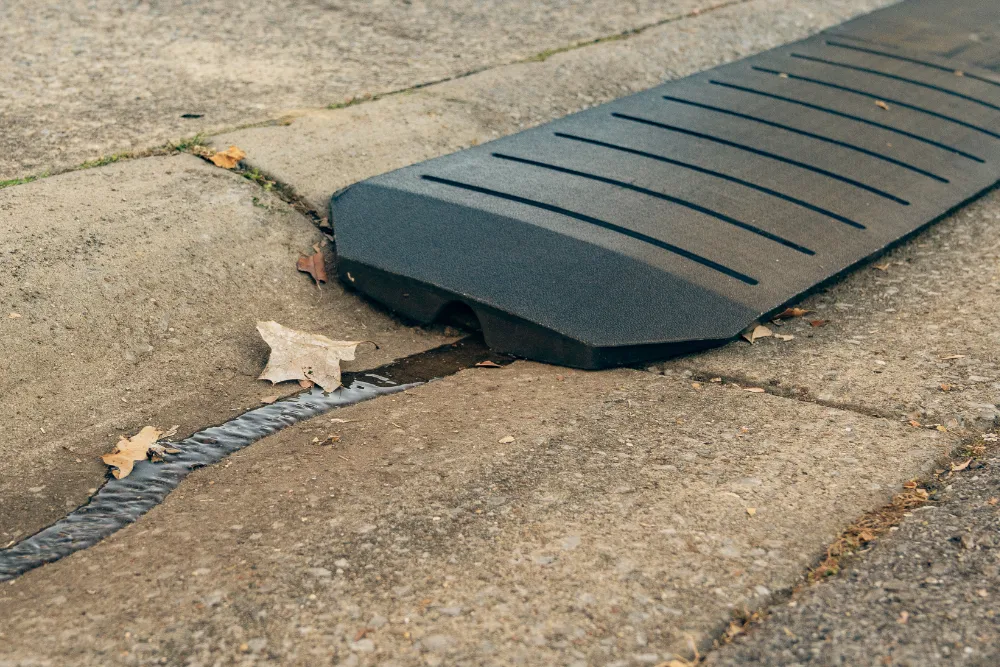
Smooth Curb is designed for the rounded profile of a rolled driveway curb. Its standard three-section kit covers 12 feet along the curb; published dimensions are 17 inches front to back and 3 inches high. Those dimensions describe the product, not a guarantee that it fits a 3-inch curb or clears your vehicle.
Use the curb measuring worksheet to record the profile, placement space and tire paths. Account for both front and rear overhangs when assessing the planned crossing. If clearance remains uncertain, have it assessed before driving through. Confirm fit and installation with the current product details and installation instructions.
Keep the gutter water path open and confirm permission to place a ramp where the curb or gutter is controlled by someone else. Do not improvise a vehicle ramp from loose sandbags, boards or unsecured fill.
7. Use another parking space if you cannot cross
If the car cannot cross with adequate clearance and visibility, leave it in an available permitted parking space while you investigate. Street parking is only an option where it is allowed and does not obstruct traffic, walking routes or another driveway.
8. Get help with the driveway or vehicle
For a steep transition or crest, ask a qualified driveway contractor to assess the grades, drainage and any required permissions. For new sagging, damaged suspension or a modified car, use a qualified vehicle technician. Changing suspension or regrading pavement should follow an assessment, not be the first experiment.
A curb ramp changes the crossing at its placement point. For a problem elsewhere on the drive, see the steep-driveway guide before assuming that more ramp sections will solve it.
Choose the fix that matches the contact point
- Contact at a rolled curb: measure the curb and vehicle path, then assess a compatible ramp.
- Contact at a crest or sharp slope change: have the driveway geometry assessed.
- New contact on a familiar route: check vehicle condition and recent changes.
- No clear path or uncertain clearance: stop and use another parking option while arranging help.
For a Smooth Curb fit question, send our team photos and measurements of the curb and driveway entrance. That is more useful than choosing a ramp from a vehicle model name alone.
Questions about reversing over a driveway entrance
Why does my car scrape only when backing out?
The vehicle meets the entrance in a different sequence when reversing. Front and rear overhangs, the wheelbase, load and driveway slope all affect the path of low components. Identify the actual contact point rather than assuming a universal driving-angle fix.
Should I change my suspension to stop driveway scraping?
First have the vehicle and driveway assessed. Suspension modifications can affect more than clearance and must follow vehicle-specific guidance. A curb ramp will not repair worn or damaged suspension.
Can I use sandbags or loose boards as a temporary ramp?
Do not use loose sandbags, boards or unsecured fill as a vehicle ramp. Choose equipment intended for the crossing and install it under its instructions, or use another parking space until the problem is resolved.
Is backing out at an angle always better?
No. Available space, visibility, traffic and vehicle geometry vary. Do not use the sidewalk, landscaping or an adjacent traffic lane as extra maneuvering room to avoid a scrape. Follow vehicle-specific instructions and stop if the crossing cannot be made with adequate clearance.
Will a driveway curb ramp guarantee that my car never scrapes?
No. A compatible ramp can change the transition at a rolled curb, but vehicle clearance and the rest of the driveway still matter. Measure the curb and planned path before ordering.