

Blog
What Is a Driveway Curb Ramp? Fit, Uses and Limits

A driveway curb ramp is a sloped piece or connected system placed at a compatible curb to change the path vehicle tires follow between the street and driveway. It can make that transition less abrupt. It does not raise the whole driveway, and it is not a guarantee that every vehicle will avoid scraping.
This guide explains the product category, when a driveway ramp may be useful, and what to check before buying Smooth Curb. For measurements, go to the curb-ramp selection guide.
Table of Contents
What Are Driveway Curb Ramps?
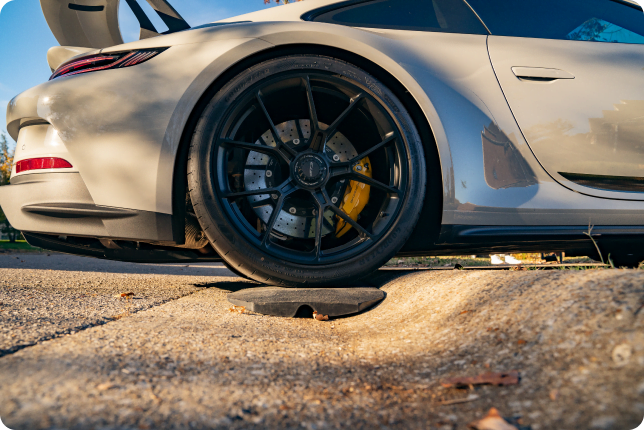
At a rolled curb, a ramp fills part of the gutter-to-curb transition so the tires follow a different incline. The front bumper, underside, and rear overhang then move relative to the pavement as the wheels climb. The outcome depends on the ramp profile, driveway shape, and vehicle geometry together.
The word “ramp” covers several products with different jobs. A driveway curb ramp is not the same as a loading ramp, vehicle-service lift, garage-threshold ramp, or wheelchair-access system. Choose for the actual location and intended use.
Common Materials and Designs
Rubber, concrete, plastic, and metal appear in different curb-ramp products and entrance modifications. Compare the specific design, stated dimensions, load rating, surface, drainage, assembly, and handling requirements. Material alone does not establish how a product will perform at your driveway.
A modular rubber system can be removed according to its instructions. A concrete alteration changes the entrance itself and needs a site-specific assessment. A light portable product may be designed for a different load or task. These choices are not interchangeable solely because they are called ramps.
Potential Benefits and Their Limits

When a ramp fits the curb and the vehicle has adequate clearance, it can make the curb crossing less abrupt and may help with a scrape at that location. Removable sections also allow access to the gutter when moved according to the product instructions.
Those possibilities do not establish better fuel economy, longer suspension life, preserved alignment, or a guaranteed reduction in repair bills. A vehicle model that clears one installation may still scrape at another. Assembly and maintenance also vary by product.
Practical Limitations
A ramp may add little value to an entrance that already works well. It also needs space, suitable placement, adequate coverage, and ongoing access for cleaning or maintenance. A heavy system takes planning to handle and store if removed.
Check placement requirements with your municipality, HOA, landlord, or property owner where appropriate, especially at a shared or public curb. Consider the appearance and space the installation will occupy, but do not assume it will increase property value.
Should You Consider a Curb Ramp?
Consider One When the Curb Is the Problem
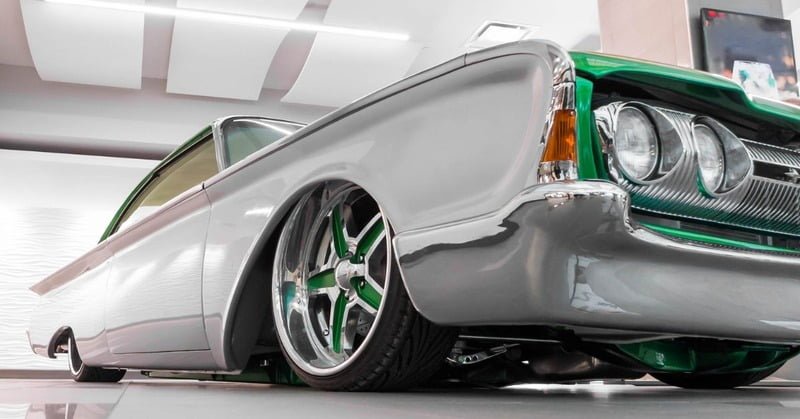
Start by locating the contact point or abrupt transition. Note whether the front lip, underside, or rear overhang touches, and whether it happens at the gutter, farther up the driveway, or at the garage. A ramp at the curb only changes that part of the route.
If the problem is at a rolled curb, compare its profile with the ramp and assess the vehicle along the tire paths used in both directions. Include turns, usual loads within the vehicle’s limits, and any suspension or body modifications. For the detailed front, underside, and rear checks, use the lowered-car fit guide.
Each vehicle sharing the entrance needs its own clearance assessment. Frequent use may make the entrance worth improving, but it does not establish that one ramp suits every vehicle that visits.
Pause When the Fit or Need Is Unclear
If your vehicles already cross comfortably with adequate clearance, a ramp may be unnecessary. If the problem is a separate crest, sharp vertical curb, unusual profile, or garage threshold, first determine which solution addresses that location.
Resolve uncertain placement requirements and compare purchase, handling, maintenance, and return terms before ordering. For uncertain curb or vehicle fit, send our team side-view photos and measurements instead of buying based only on a vehicle name or curb height.
What to Know About Smooth Curb
A System for Rolled Driveway Curbs
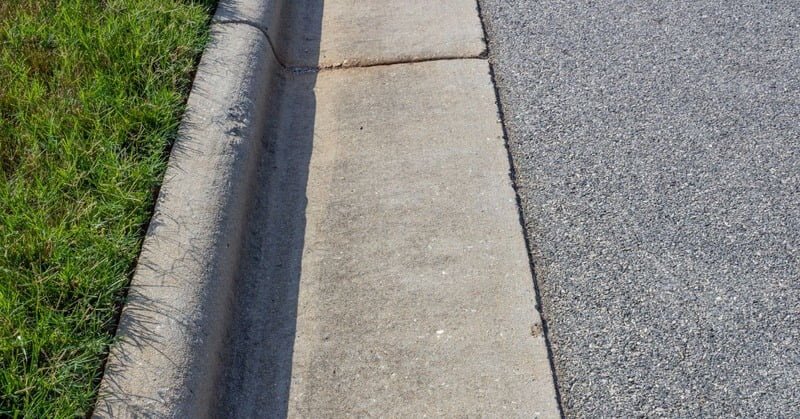
Smooth Curb is designed for the transition between a street gutter and a rolled driveway curb. The standard three-piece system measures 144 inches along the curb, 17 inches front to back, and 3 inches high. Check the whole profile: those dimensions alone do not confirm fit for a particular curb height.
There is no measured “80% smoother” guarantee established in this guide. The practical question is whether the ramp profile, tire paths, and vehicle clearance work at your entrance.
Assembly and Coverage
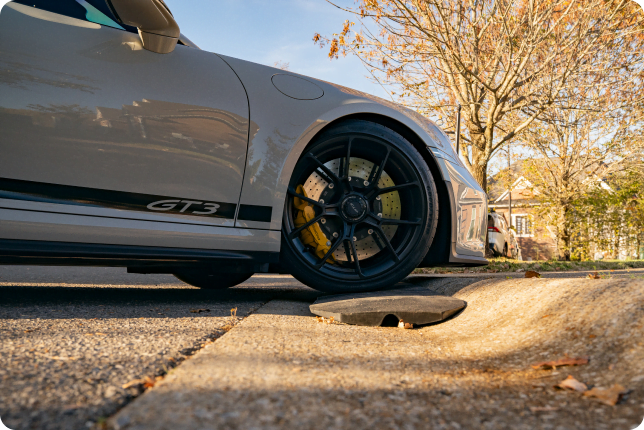
The kit contains two end sections and one center section, plus connecting bolts and nuts. The three sections span 12 feet along the curb. Each center extension adds 4 feet of coverage; height and depth remain unchanged.
The complete kit weighs 128 pounds. Two people can usually install it in less than 15 minutes, with actual time depending on preparation and handling. Follow the installation instructions to assemble and position the sections.
Material, Drainage, and Maintenance

Smooth Curb is made from 100% recycled rubber and includes a drainage channel beneath the ramp. Keep the channel and surrounding gutter clear of leaves and sediment and check drainage after installation. Inspect placement and hardware during routine maintenance.
The FAQ directs owners to disconnect the bolts before relocating the sections to avoid damage. A material specification or drainage channel is not a guarantee of performance in every weather, debris, or installation condition.
Capacity and Intended Use
The published load rating is up to 32,000 pounds. Capacity, vehicle clearance, and curb compatibility are separate checks. Smooth Curb is a driveway product for vehicle tires; do not treat it as a wheelchair-access system or as evidence that an accessible route meets ADA requirements.
Cost and Purchase Terms
Review the current product price and specifications and any additional coverage you need. The system includes a 3-year limited warranty. Compare the purchase with your actual need rather than assuming future repair savings.
Check fit before installing. Contact us within 30 days of receiving an order to discuss a return. Approved returns carry a 30% restocking fee, and the customer pays return shipping. Condition, packaging, and accessory requirements apply; read the return policy before ordering.
Use Owner Experiences as Examples
Owner photos and reviews can show how the product has been used at particular entrances. They help illustrate placement, but they are not controlled performance tests or a substitute for measuring your curb and vehicle. Use the details of your installation to make the decision.
Start with the Entrance You Need to Change
A driveway curb ramp changes a local transition for vehicle tires. Identify that transition, compare the profile and clearance, and review coverage, drainage, handling, and placement before buying. The selection and lowered-car guides linked above provide the next level of detail when you are ready to measure.
FAQs
Are there other types of driveway curb ramps?
Yes. Products and permanent entrance modifications use different materials and designs. Compare the actual intended use, dimensions, load rating, drainage, and installation instructions rather than choosing from the material name alone.
How do I choose a curb ramp for my driveway?
Identify where the vehicle contacts the entrance, measure the curb profile and tire paths, and assess front, underside, and rear clearance. Then compare coverage, handling, drainage, placement requirements, and purchase terms.
Can I build my own driveway curb ramp?
A custom solution needs an assessment of the profile, support, materials, intended load, drainage, and placement requirements. An improvised board or fill at the curb does not establish a suitable vehicle ramp.
Can I place a ramp at my curb?
Check the requirements for your location with the municipality, HOA, landlord, or property owner where appropriate. A removable product does not automatically establish permission to place it in shared or public space.
Can I use a driveway curb ramp for another purpose?
Use each product only for its intended application. Smooth Curb is for vehicle tires at a compatible rolled driveway curb; it is not a cargo-loading ramp, vehicle-service lift, or substitute for a wheelchair-access system.