

Blog
Scratched Front Bumper on a Curb? Repair Options by Damage

The right fix for a front bumper scratched on a curb depends on what is damaged: transferred material, the clear coat, deeper paint or plastic, or the bumper cover and its mounts. Start by gently cleaning the area with a product suitable for the finish, then inspect it in good light. A loose cover, crack or new warning needs a different response from a cosmetic mark.
Can a curb scratch on a bumper be repaired?
| Damage category | Appropriate repair direction |
|---|---|
| Material transferred onto intact finish | Clean and reassess. A finish-compatible product may remove transferred material; missing paint will remain. |
| Fine clear-coat scratches | A suitable scratch-removal product may improve the appearance within its instructions and limits. |
| Missing color, deeper scratch or gouged plastic | Compare touch-up expectations with professional preparation and refinishing. |
| Crack, tear, broken tab or loose bumper cover | Have the cover and attachment points assessed; polishing cannot restore them. |
| Damage near sensors or mounting areas | Ask the repairer to check the vehicle-specific repair and refinishing requirements. |
Transfer and missing finish can appear together. Paintcraft’s bumper-scrape examples illustrate why cleaning a mark and restoring lost paint are different jobs. Do not choose a repair solely because the scrape looks white or dark; inspect what remains after gentle cleaning.
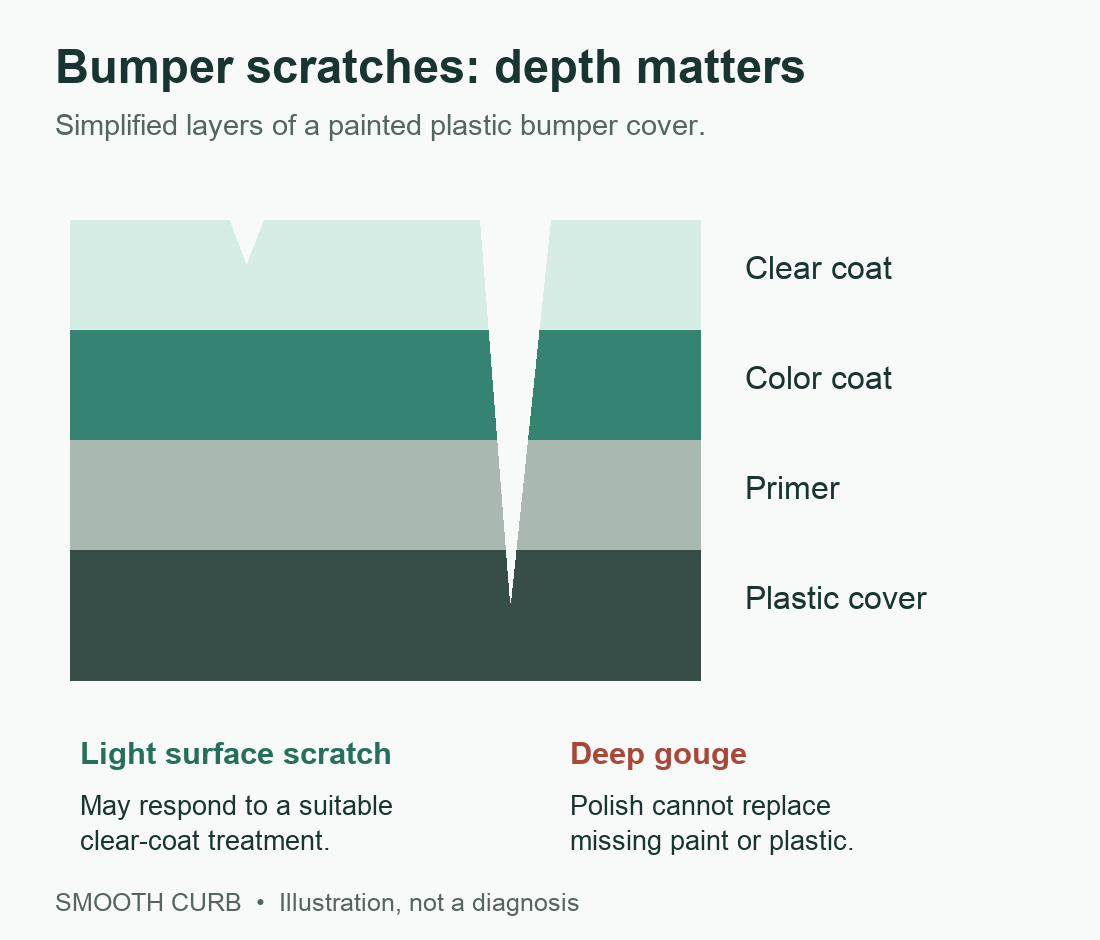
What DIY scratch repair can and cannot do
For a fine scratch in a compatible glossy clear-coat finish, a suitable product may reduce its visibility. 3M’s scratch-removal instructions explain that the process removes a small amount of clear coat and cannot remove a scratch that extends beyond it. Abrasion cannot put missing color or plastic back.
Follow the exact product instructions and the vehicle’s finish-care guidance. Do not apply a generic sanding, solvent or polishing recipe to every bumper, especially matte finishes, wraps or areas with special restrictions. Stop and seek advice if you cannot identify the finish or damage depth.
Touch-up paint may make a small exposed mark less noticeable, but a deep gouge can still have visible edges and uneven texture. Decide whether a modest cosmetic improvement meets your needs. A smooth, closely matched result over a larger area may require professional plastic preparation and refinishing.
Cracks, tears and damaged attachment tabs require a repair assessment. 3M separates cosmetic plastic repair from two-sided bumper repair and directs repairers to material-appropriate procedures. A cover that has popped out may have more than a surface scrape; pressing it back into place does not establish that the clips and mounts are sound.
What should a professional bumper quote include?
Request a quote tied to the actual damage. Useful details include the area being repaired, plastic work, whether the cover must come off, preparation and painting, blending or finish matching, and any replacement clips or parts. Ask what visible result is expected, particularly if comparing a localized touch-up with refinishing.
If the bumper contains sensors or radar-related areas, the repairer should check that model’s requirements. 3M’s guidance on OEM paint requirements explains that coating and repair restrictions can depend on the system. This does not mean every light scuff automatically requires calibration.
Costs vary with the work, vehicle and local shop. An inspection-based quote is more useful than an unsupported universal price. If considering a claim, check your actual policy, deductible and assessed damage; fault alone does not establish coverage.
An underside scrape versus a loose or damaged part
A confirmed cosmetic mark on the underside of a secure bumper can be an appearance decision you address later. That conclusion depends on checking the impact, not simply on the mark being hidden from view. A dragging panel, cracked cover, changed fit or new noise deserves assessment.
If the sound comes from farther underneath, use our guide to new noise after scraping the bottom of your car. Do not crawl under a car held up only by its emergency jack to inspect the damage.
Preventing the same driveway contact
Identify the contact point before buying a product or altering the entrance. A low front overhang at a curb transition and middle-of-car contact at a crest are different problems. Our car scraping the driveway guide explains what to check. A ramp must suit the specific transition; it cannot guarantee that the bumper will never scrape elsewhere.
Front bumper scratch questions
Can a scratch be buffed out?
Some light scratches in a suitable clear-coat finish can be improved. Buffing cannot replace missing color or fill gouged plastic, and it is not suitable for every finish.
Do I need to replace the whole bumper?
Not necessarily. The decision depends on material, damage, mounting condition and the vehicle’s repair requirements. A repairer should explain why repair or replacement is appropriate.
Can I leave a scratch underneath the front bumper?
If inspection establishes that it is only cosmetic and the cover and nearby parts are secure, leaving the mark can be an appearance choice. A crack, loose part or new noise needs a separate assessment.