

Blog
Wheel Bent Inwards After Hitting a Curb? What to Do

A wheel that is newly tilted inward or displaced after hitting a curb needs professional inspection. Do not continue driving with an obviously displaced wheel or a tire rubbing the bodywork. Arrange assistance. The visible angle can help describe the problem, but it cannot tell you which part failed or whether the wheel itself is bent.
Is the wheel tilted, turned or pushed back?
“Bent inwards” can describe several different appearances. Compare the wheel’s position with how it looked before the impact, and tell the repairer which change you notice. A small amount of factory-specified wheel tilt is different from a new, obvious change after a collision.
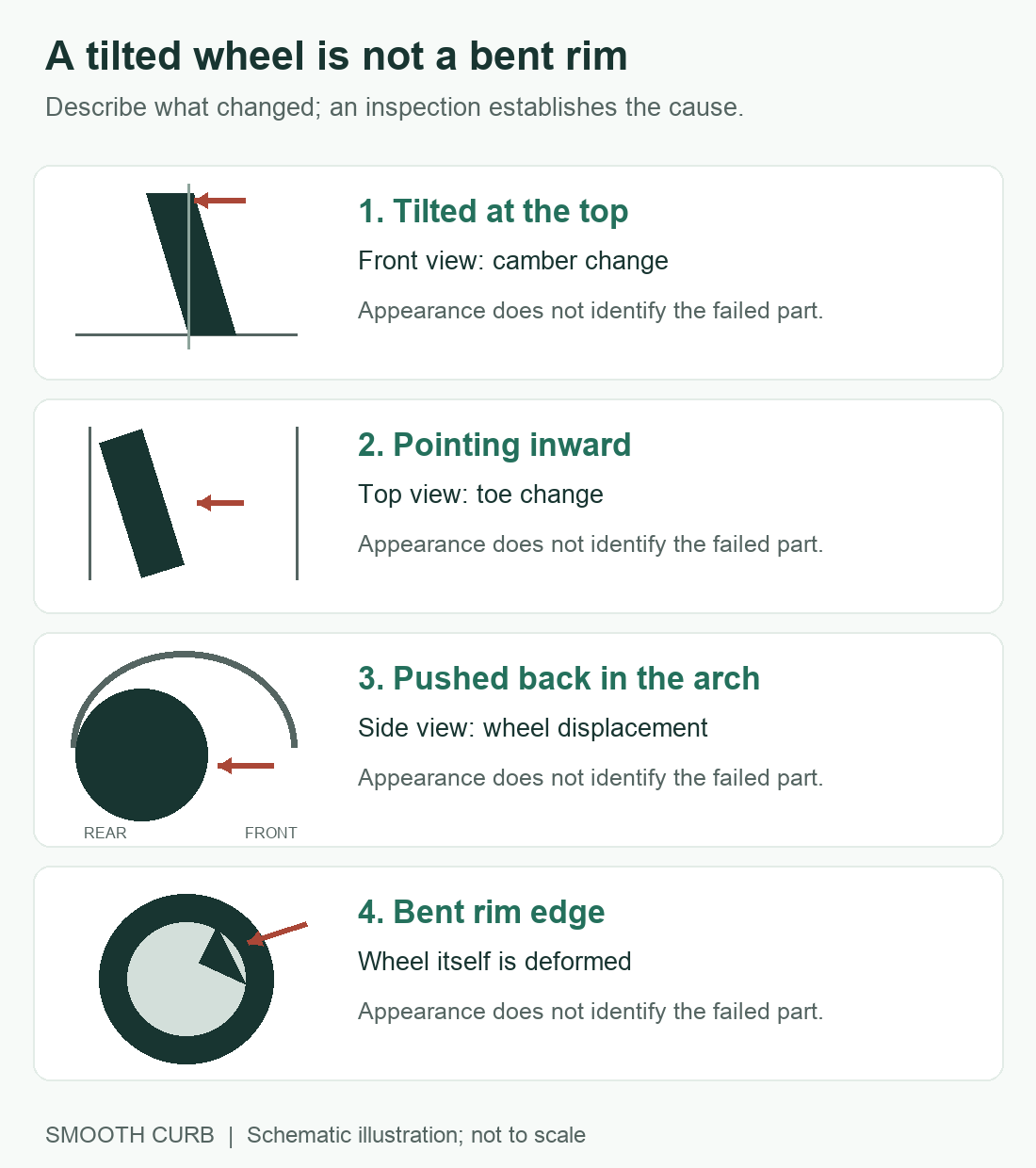
| Appearance | What the description means |
|---|---|
| Top of the wheel leans inward, viewed from the front | A camber angle. The appropriate angle depends on the vehicle’s specifications. |
| Wheel points inward, viewed from above | A toe angle. This differs from the wheel leaning at the top. |
| Wheel sits farther back in its wheel opening | A position change that warrants inspection of the parts locating and supporting the wheel. |
| Outer wheel edge is visibly deformed | Damage to the wheel itself; steering or suspension damage may also be present. |
MOOG’s alignment explanation illustrates camber and toe and explains why measurements must be compared with the manufacturer’s specifications. “Needs alignment” describes a geometry problem; it does not identify the damaged component.
What can cause the wheel position to change?
The impact can affect components that locate, support or steer the wheel. Depending on the vehicle’s design and the impact direction, an inspection may involve the control arm and ball joint, strut or other suspension parts, steering knuckle and steering linkage. Tire and wheel damage require their own assessment. These are possible inspection areas, not a list of parts every curb strike damages.
A front wheel that points the wrong way and a rear wheel that leans inward can involve different assemblies. Even two vehicles with similar-looking wheel tilt may need different repairs. Avoid choosing a replacement part from a photograph, a forum account or the apparent severity of the angle alone.
What to record before the inspection
From a safe standing position, note which wheel hit, whether it is leaning or sitting differently in the opening, visible tire injury and any pressure loss. Photograph the accessible damage if safe. Report pulling, vibration, noise or a steering-wheel position change that you already noticed; do not keep driving to reproduce those symptoms.
Do not jack up the car for a roadside wheel-wiggle, spinning or bounce test. Component-play checks and alignment measurements belong in an appropriate professional inspection. If there is a cut or bulge, use our curb-related tire damage guide to understand that separate concern. For a wider front-corner impact, see front passenger-side curb impact checks.
Can an alignment alone fix the wheel?
An alignment adjusts applicable wheel angles; it cannot restore a bent or broken component. The shop should establish the condition of the affected parts, repair damage as required, then perform the appropriate alignment and final checks. Ask what caused the abnormal measurement and whether the geometry can be brought within the vehicle’s specifications.
A crooked steering wheel is a related symptom, but it is not the same thing as a visibly tilted road wheel. Our crooked steering wheel after a curb impact guide covers that distinction. Report both symptoms if both are present.
Can a bent wheel be straightened, and what affects cost?
First establish whether “bent wheel” means the rim itself or the position of the entire wheel. Cosmetic refinishing, structural wheel repair and suspension repair are different work. Do not assume that a slightly bent alloy wheel is approved for straightening.
Manufacturer requirements matter. Subaru’s wheel-repair position statement rejects wheel reconditioning; FCA’s December 2025 wheel statement distinguishes paint-only refinishing from structural modification. Ask the shop which procedure applies to your wheel and vehicle, and why repair or replacement is appropriate.
Request an itemized estimate for diagnosis, affected components, wheel or tire replacement if needed, labor, and alignment. An alignment-only quote is not a complete estimate for collision damage. A useful price must reflect the inspected vehicle and actual work; the visible angle alone cannot establish the bill or whether the vehicle will be declared a total loss.
Questions about a wheel bent inward after impact
Can I drive if the wheel is only slightly tilted?
A newly abnormal position after impact needs assessment. The apparent size of the tilt does not establish safety. Do not continue with an obviously displaced wheel, tire contact or changed control; arrange assistance.
Can hitting a curb bend a rear wheel inward?
A rear-wheel impact can affect the wheel or the suspension locating it. The repair depends on that vehicle’s design and inspection findings, not on whether the damaged wheel is at the front or rear.
Will replacing the rim fix the angle?
Only if inspection establishes that the wheel itself is the relevant problem. A new rim does not repair damaged steering or suspension components.
Does insurance cover a wheel bent after hitting a curb?
Collision coverage may apply, subject to your policy and deductible. Comprehensive is a different coverage category. See our curb-impact insurance guide for the coverage and claim questions to ask.
Wheel pushed back rather than tilted
If the wheel sits further back in the arch than the one on the other side, rather than leaning in at the top, the impact has moved something behind it rather than just bending the wheel. The usual candidates are a lower control arm or its bushings and mounting points, a tie rod, a strut or its mount, or the knuckle, hub and bearing assembly, and on a hard hit the subframe the arm bolts to. A photo cannot tell which; a shop has to measure it. Do not drive a visibly displaced wheel to the shop, and do not try to lever or jack it back into place. A car that drives normally for a few blocks has not been cleared. The repair scope, and therefore the cost, is set by the inspection, so treat any estimate quoted before the car is on a lift as a placeholder.