

Blog
Curb Rash: Wheel Damage, Repair Limits and Next Steps

Curb rash describes scrapes or gouges on a wheel after contact with a curb. Some marks affect only the finish; an impact can also damage the wheel or tire. Before choosing a cosmetic repair, establish what was struck and whether the damage needs professional assessment.
Table of Contents
What is curb rash?
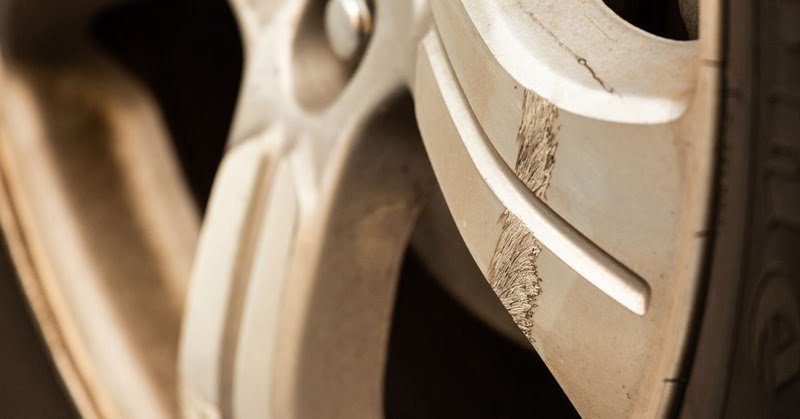
How it happens
Wheel-to-curb contact can occur while parking or maneuvering through a tight entrance. A scrape on the wheel face is different from contact beneath the car at a driveway transition. Identify the actual contact point before choosing a prevention measure.
Describe the marks without diagnosing them
Surface scrapes or scuffs
These may appear as rubbed or scratched finish. Appearance alone does not establish the condition of the rest of the wheel and tire.
Gouges
A gouge indicates visible material loss. Do not decide that it is repairable by judging its depth yourself; wheel construction and damage location matter.
Dents and bends
A visibly distorted rim needs specialist assessment. Sanding or painting cannot restore its shape or establish its strength.
Chips and cracks
A chip in the finish and a crack in the wheel are different findings. A suspected crack requires prompt assessment; do not cover it with filler or paint.
Several kinds of damage together
Report every affected area, including the tire. One obvious scuff should not distract from another impact mark or a new driving symptom.
Can curb rash be repaired?
A suitable wheel may qualify for limited cosmetic refinishing after inspection. The wheel or vehicle manufacturer’s procedure determines whether the particular material, finish and damaged area can be treated.
RONAL’s published wheel-repair guidance distinguishes permitted surface work from structural repairs and calls for cracked wheels to be replaced. It prohibits processes such as welding, forming and structural material removal. Its limits are specific to the wheels and finishes covered; they are not a universal DIY allowance.
When wheel damage needs prompt attention
Stop as soon as it is safe and arrange assistance if curb contact leaves a flat or bulging tire, a visibly cracked or distorted wheel, impaired steering, or strong new vibration. Follow the vehicle’s warning messages and manual. Do not continue driving to test whether the problem clears.
Michelin’s tire-repair guidance says a sidewall bulge requires replacement and advises stopping as soon as it is safe. Its tire-safety guidance also recommends professional inspection after a curb or pothole impact because internal damage may be hidden.
A finish scratch does not by itself prove that a wheel is structurally weak or will fail later. The priority is identifying damage that affects use, then deciding how to address any cosmetic marks.
What to record after curb contact

Park safely away from traffic before looking at the wheel. Keep the vehicle stationary and record what is accessible from outside; wheel removal and access beneath the car belong with properly equipped professionals.
Photograph visible marks
Take an overall photo and close-ups of the wheel edge, face and visible tire damage. Record which wheel was involved and how contact happened.
Keep clear of sharp edges
Do not run your fingers across a gouged edge or reach behind the wheel to feel for damage. Use photographs and a light from a safe position.
Note visible distortion
Report a bent edge, suspected crack, tire bulge or changed wheel position. Do not spin, hammer or straighten the wheel to investigate.
Record symptoms and limitations
Tell the shop about pressure loss, warnings, new vibration or steering changes already noticed. Note what you cannot see; an external look is not a complete inspection.
Ask about safe transport
If safe operation is uncertain, use roadside assistance and explain the impact and visible damage. A car that still moves has not thereby passed a wheel or tire assessment.
Choosing a repair or replacement

Understand the limits of cosmetic kits
A kit label cannot determine whether an impacted wheel is suitable for refinishing. Avoid sanding away damage, filling a suspected crack, or applying heat. Ask for the applicable manufacturer procedure before treating the finish.
Questions for a wheel or tire specialist
- What wheel material and finish are present, and which repair guidance applies?
- What checks are needed for the wheel, tire and any related impact damage?
- Is the proposed work cosmetic, or does the wheel require replacement?
- What is included in the estimate, and what checks are required afterward?
Request the findings before authorizing cosmetic work. Do not assume that a service advertised as wheel straightening or welding is permitted for your wheel.
Common curb-rash questions
Is curb rash expensive to fix?
Request an estimate after inspection. Wheel design, finish, damage and the need for replacement determine the scope; a generic price range cannot tell you what your wheel needs.
How long does a repair take?
Ask the repairer for a schedule based on inspection, the approved refinishing process and any replacement parts. Do not assume a same-day service is suitable for every wheel.
How do I choose a repairer?
Ask whether they can identify your wheel and finish, inspect for impact damage, and follow the applicable manufacturer procedure. Request written findings, an itemized estimate and any warranty terms.
Can curb rash affect driving safety?
The label alone does not answer that. A superficial finish mark and an impact that damages the wheel or tire need different responses. Have suspected impact damage assessed before treating it as cosmetic.
Will insurance cover curb rash?
Ask your insurer or protection-plan provider to assess the incident under your actual policy or contract. Provide photographs and the repair estimate; do not assume coverage from the term “curb rash.”
Is there a quick fix?
Paint or a cover can conceal a mark without establishing that the wheel is sound. Have questionable damage assessed before applying a cosmetic treatment; do not use a touch-up to hide a crack or deformation.
Will repairing it increase resale value?
Do not assume a repair will pay for itself at sale. Obtain the repair findings and quote first, and retain the records so the work can be explained accurately.
Is curb rash different from wheel scuffing?
People use both terms for wheel marks, often without specifying their depth or cause. Describe what is visible and what happened instead of using either label as a repair or safety assessment.
Can I rule out structural damage from a photo?
No. A photo can document visible marks, but inspection may need access to surfaces hidden by the tire or wheel mounting. Ask a qualified wheel or tire specialist what checks your wheel requires.
Reduce the chance of repeat contact
Maneuver slowly and leave space between the wheel and curb. If you cannot judge the gap, stop and reassess before continuing. Use mirrors and direct observation along with any assistance features; NHTSA explains that backup cameras supplement driver checks.
For repeated scraping at a driveway entrance, first identify whether the problem is wheel-to-curb contact or clearance beneath the vehicle. The curb-measuring guide helps assess a rolled-curb transition and placement space. A compatible driveway curb ramp changes that transition; it does not repair wheel damage or guarantee protection from parking scuffs.
Cosmetic scrape or structural damage? The three kinds of rim damage
| Type | What you see | Verdict |
|---|---|---|
| Rash (scuffs and gouges) | Scraped finish on the lip or face, metal showing, no change in shape | Cosmetic. Refinish or leave it. Does not affect safety. |
| Bend | Lip warped in or out, tire losing air slowly, vibration that starts after the hit | A specialist can measure it against spec; minor bends on steel and some alloys can be straightened, chrome and many cast alloys are usually replaced. |
| Crack | A line in the metal, often near a spoke or the lip, sometimes only visible with the tire off | Replace. Manufacturers do not permit welding or reshaping a cracked wheel, and it can fail without warning even if it holds air. |
A broken plastic wheel cover is not rim damage, and an intact cover does not rule it out.
Why a damaged rim makes the car vibrate
A wheel is balanced on the assumption that it is round. A bend or a missing chunk of lip puts weight and shape off-center, and the tire no longer meets the road evenly through each rotation. You feel that as a shake that grows with speed, usually starting somewhere between 40 and 60 mph and coming through the steering wheel if it is a front wheel or the seat if it is a rear. Rebalancing can mask a small bend for a while; it cannot fix it. If a shake starts after a curb strike, have the wheel checked for trueness before paying for balancing or alignment.
What curb rash repair costs
A do-it-yourself kit runs about $15 to $50 and the whole job $20 to $80 with sandpaper, filler, primer and paint, and it is only suited to surface scuffs on a painted alloy. Professional refinishing of scratches and gouges typically runs $50 to $150 per wheel on steel or painted alloy. Straightening a minor bend on a steel wheel is in the same range. Chrome runs $200 to $500 per wheel for minor work and is usually replaced for anything more, and plastic-clad wheels are generally replaced rather than repaired. Labor rates, wheel size and a finish that has to be color-matched push the number up; the quote you get before the tire comes off is a guess.
Fixing rash yourself
For a surface scuff on a painted alloy, the process is: clean the wheel, sand the damaged area from coarse to fine grit until the gouge edges are feathered, fill any depth with wheel filler and sand flush, prime, paint to match, clear coat, then polish after it cures. Budget a weekend, mostly waiting for coats to dry. Do not do this on a wheel that is bent or cracked, on chrome, or on a diamond-cut or machined face, which cannot be matched by hand. If the damage goes past the lip into the spokes or barrel, or the tire has been losing air, that is a wheel shop, not a kit.