

Blog
Tire Inspection Checklist: Tread, Pressure and Damage

A routine tire inspection has three parts: look for damage, check tread wear and measure cold pressure. Record changes so you can explain them to a tire professional. An outside check cannot rule out internal damage or certify that a tire is safe to keep using.
If a tire is flat, has an outward bulge, shows exposed cords or accompanies a serious change in vehicle control, stop as soon as it is safe and arrange assistance. The steps below are for routine checks on a safely parked passenger car or light truck, not for deciding whether to drive on a damaged tire.
Table of Contents
How to inspect your tires
1. Prepare for a parked inspection
Use a safe, level place away from traffic. Secure the vehicle according to its owner’s manual and switch it off. Have a flashlight, a reliable pressure gauge, a tread-depth gauge and the vehicle’s tire-pressure specification available.
Keep the check within reach
Inspect accessible areas from beside the parked vehicle. Do not crawl underneath, jack it up or remove a wheel for this checklist. If part of a tire is hidden, leave that area for professional inspection rather than reaching into an unsafe position.
2. Look for visible changes
- Look at the accessible tread and sidewalls for cuts, cracks, embedded objects, outward bulges or exposed reinforcing material.
- Compare wear across the tread: note one-sided wear, a worn center or uneven patches without assigning a cause.
- Record which tire is affected, any known impact, pressure warnings, repeated air loss, noise or vibration.
Have damage or an unfamiliar shape assessed. Do not pull out an embedded nail, probe a cut or run your hand over sharp debris. Continental’s tire-damage guide explains why visible wear and impact signs need context; a mark alone does not reveal the full injury.
3. Check remaining tread
Follow your tread-depth gauge’s instructions and measure the main grooves at several accessible positions across and around each tire. Note the lowest readings and any unevenness. One measurement cannot represent the entire tire.
NHTSA advises replacement when tread wears down to 2/32 inch. The built-in wear indicators provide another check: tread level with the bars needs replacement. This is not a claim about every jurisdiction’s law or a guarantee of performance above that depth. Ask the tire professional about your tire, weather and intended use.
A penny test is a rough screening method; it does not replace checking the rest of the tire. Michelin distinguishes a tread-depth measurement from assessing damage. Adequate tread does not cancel a bulge, cut or pressure-loss concern.
4. Measure cold tire pressure
For the routine check, use cold tires: NHTSA defines this as the vehicle not having been driven for at least three hours. Find the recommended pressure on the vehicle placard or in its manual. The maximum on the tire sidewall is not the vehicle’s target; front, rear and spare specifications may differ.
Apply the gauge as its instructions direct, record the reading and compare it with the specification for that position. Include an accessible spare when fitted. For an otherwise undamaged tire, adjust routine inflation to the applicable specification or ask a tire service provider to do it. Do not treat inflating a flat or damaged tire as a repair.
Michelin’s pressure guidance cautions against releasing air from a hot tire. Repeated pressure loss needs investigation. TPMS is a warning system, not a substitute for a gauge or an inspection.
When to check your tires
Before a trip or after an impact
Notice an obviously low tire or new damage before setting off. Check pressure before a long trip, and arrange assessment after a significant impact or new handling symptom. For curb contact specifically, see what to check after a tire hits a curb.
Monthly checks
Make pressure, wear and visible-condition checks a monthly routine. Keep a short record by wheel position so repeated air loss or a developing wear pattern is easier to describe.
Temperature and seasonal changes
Recheck cold pressure as outdoor temperatures change. If changing seasonal tires, ask the installer to assess the set coming off and the set going on. Continue following the vehicle and tire manufacturers’ maintenance requirements.
Professional inspections and tire age
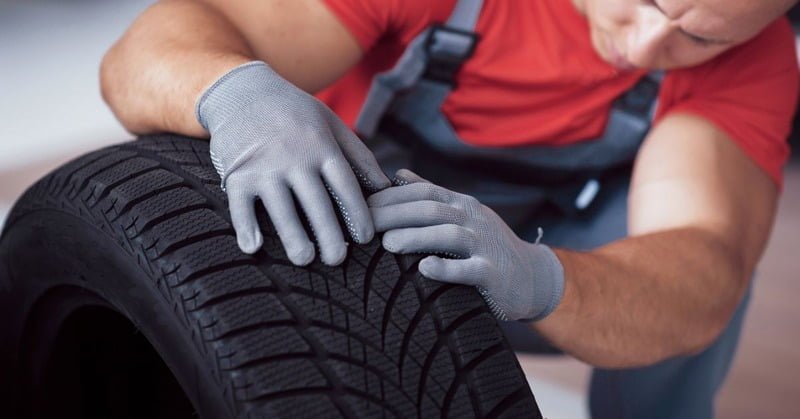
Michelin recommends professional tire inspection each year. Do not wait for that appointment if damage or a new symptom appears. Ask the shop to record tire age and any follow-up needed.
The last four digits of the DOT date code identify the manufacture week and year. If the code is inaccessible, have the shop read it. Tread depth is only one part of replacement decisions: follow the applicable vehicle and tire makers’ age guidance, including for a spare. This guide sets no universal service-life limit.
What to do with your findings
Give the tire professional your readings, safe photographs and the history of any impact or low-pressure driving. Ask what caused the concern, whether the tire can remain in service, and what inspection or replacement is required. Confirm how to get the vehicle there if driving is in doubt.
USTMA’s repair guidance requires an off-wheel inspection to decide whether a puncture qualifies. Routine observation is useful; it does not approve a repair. A driveway ramp likewise cannot correct tire damage or replace maintenance.
Tire inspection questions
Does this checklist apply to motorcycles and commercial trucks?
This guide covers routine checks for passenger cars and light trucks. Use the inspection schedule, loading instructions and tire specifications for your actual vehicle. Do not transfer a car’s pressure setting, tread recommendation or maintenance interval to a motorcycle, trailer or commercial truck.
Does uneven wear prove how the car was driven?
No. Record whether wear is concentrated on one edge, in the center or in patches. Inflation, wheel alignment, suspension condition and usage can all be relevant. A tire professional can investigate; the pattern alone does not establish that a driver caused it.
Should I change the target pressure when the weather changes?
Use the applicable vehicle specification for cold tires. Changing outdoor temperatures are a reason to measure again, not to invent a different target. Do not release air from a hot tire simply to match the cold specification.
Does a normal pressure reading mean the tire is safe?
It confirms only that reading at that time. A tire can have damage or aging concerns while holding air, and a tire driven severely underinflated can have hidden damage. Consider the tire’s condition and history alongside the gauge reading.
Can I repair a small puncture myself?
A visible object does not establish repair eligibility. USTMA calls for removing the tire from the wheel for a complete inspection and applying the tire manufacturer’s repair limits. An outside plug alone is not an acceptable permanent repair. A vehicle’s emergency mobility kit has separate instructions and limits; it does not replace the later assessment.