

Blog
Water Pooling at Driveway End: What to Check

Water pooling at the end of a driveway needs a site check. A low point, debris, runoff arriving from elsewhere or an inadequate outlet can contribute. The presence of a rolled curb alone does not identify the cause.
Smooth Curb has a hollow channel for water to pass underneath. It does not drain a low spot, include French-drain pipework or filter runoff through a porous ramp surface.
Table of Contents
What can cause water to collect at the driveway end?
Start by observing where the water comes from, where it collects and where it should leave. Include the driveway, street gutter, roof downspouts and nearby landscaping. Note whether pooling began after a change or has always occurred.
The NDS drainage-planning guide begins with drainage areas and flow paths. Applying that approach here means checking the actual grades and outlet, rather than assuming curb construction or unpaved ground caused the low point.
A rolled curb’s cross-section is only part of the geometry. The slope along the gutter, the surrounding elevations and any obstruction also affect the path of water. A drainage professional can assess these together.
What to record about the pooling
Photograph the same locations during and after rain when it is safe. Record the apparent depth, how long water remains and whether it approaches a building or walking route.
- Vehicle and garage cleanliness: note mud or sediment carried across the driveway. This describes an observed nuisance; it does not prove a specific drainage defect or corrosion risk.
- Property effects: record erosion, staining, water entering the garage or a change in pavement level. Have active water entry or settlement assessed promptly.
Signs to document

These signs help explain the problem to a drainage professional. They are observations, not a diagnosis of the cause or structural condition.
Water Accumulation
- Persistent puddles: note where they form and how long they remain after rainfall. Compare the location with the intended water path.
- Water near a foundation: document it and seek a site assessment. Do not infer the driveway’s exact slope or structural damage from a puddle alone.
Soil Erosion
- Washed-away gravel or soil: record the location and direction of flow.
- Gullies or channels: note erosion paths and whether they extend beyond your property.
Cracks and Damage
- Cracks: record new or changing cracks. Water and freezing may be relevant to pavement damage, but a photograph does not establish the cause.
- Heaving or sinking: have changing pavement levels assessed; water movement is one consideration among possible causes.
Mildew or Algae Growth
- Green growth or staining: note persistently wet or slippery areas. Appearance alone does not identify the organism or prove a particular drainage fault.
Overflowing Gutters
- Water Spillover: Gutters overflowing during rainstorms can contribute to driveway drainage issues, directing water towards the driveway rather than away from it.
Changes in Surrounding Landscaping
- Altered Landscapes: New landscaping or changes in the surrounding area can alter the natural flow of water, potentially directing more water toward your driveway.
Silt or Debris Accumulation
- Buildup at the Driveway’s End: Accumulation of silt, leaves, or debris at the end of the driveway can obstruct proper water flow, leading to pooling and saturation.
For persistent pooling, new erosion or water entering a building, consult an appropriate drainage or building professional. A proposed drain needs a suitable collection point, capacity, support and lawful outlet; do not choose a pipe or trench from the symptom alone.
What the Smooth Curb water channel does
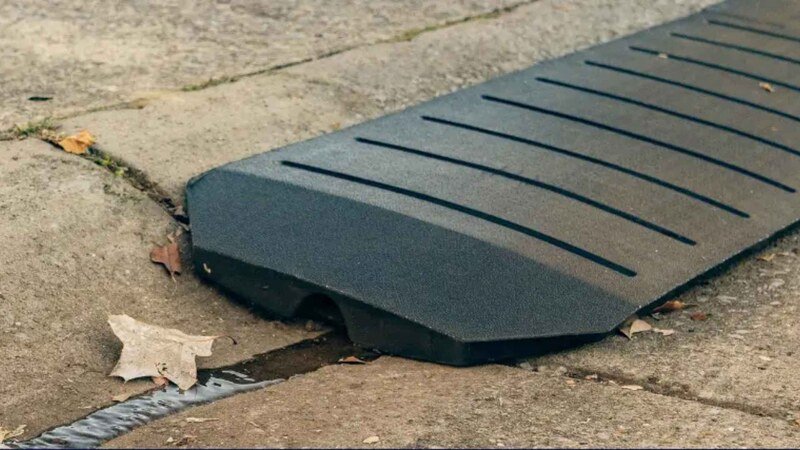
The Smooth Curb FAQ describes a hollow center channel under the ramp. This opening allows water to pass beneath a compatible installation when clear. It does not create flow where the surrounding grades and outlet cannot carry water away.
The ramp does not contain French drains, connected drain pipes or a permeable surface that recharges groundwater. A separate channel drain or subsurface drainage project has different components and installation requirements.
Keep the under-ramp water path clear
Inspect the channel entrances and surrounding gutter for leaves, sediment or other obstruction. If water begins collecting after placement, pause use and check the location and flow path with product support.
- The product photograph shows the opening beneath a ramp; it is not a drainage-capacity test. The channel does not guarantee that standing water will disappear.
Follow the assembly instructions
Use the official installation instructions for connecting and positioning the ramp. Arrange help handling the sections. Ramp assembly does not require attaching drainage pipework.
If a separate drain is appropriate, follow a site-specific design and the selected system’s instructions. NDS’s driveway drainage options illustrate dedicated channel-and-pipe systems; they are not components of Smooth Curb.
Material and maintenance limits
The product page lists recycled rubber and a 3-year limited warranty. Those specifications do not establish indefinite resistance to water, every weather condition or every contaminant.
Ask Smooth Curb about visible damage or maintenance questions. A sound ramp section still cannot correct insufficient site drainage.
Keep clearance and drainage decisions separate
A ramp changes a compatible rolled-curb tire path. It should not be purchased on a promise that tires will always stay above puddles or that the car and garage will remain clean; water depth and conditions vary.
How to plan the next drainage check
Use the observations above to choose the next step. Avoid regrading, cutting a curb or connecting an outlet before confirming who controls the affected surface and what requirements apply.
1. Check grades and the outlet
Identify low points and whether the gutter or drain has an unobstructed route onward. Ask a professional to measure levels when the flow path is unclear.
2. Check the amount and source of runoff
Include roof, driveway, street and landscape contributions. A drain selected without considering rainfall and contributing area may not address the observed problem.
3. Assess the ground for the proposed solution
If infiltration is proposed, soil conditions and available space need assessment. A French drain or soakaway is not automatically suitable merely because water pools nearby.
4. Confirm responsibility and permissions
Consult the responsible road or property authority before altering a curb, gutter or discharge route. The NDS planning guide also advises checking municipal requirements before grading or drainage work.
Choose help for the actual problem
Resolve the water-flow problem with a site assessment. For a separate rolled-curb vehicle-clearance problem, use the Smooth Curb fit guide and ask for product help when measurements are uncertain.
Related guides: garage driveway-ramp issues, recycled rubber: material, fit and care, and ramp channels versus separate drainage projects.