

Blog
Recycled Rubber Ramps: Material, Fit and Care

Recycled rubber is one material attribute to consider when choosing a driveway curb ramp. Check what the manufacturer states, then assess the product’s fit, use, care and supporting evidence. Recycled content alone does not establish a lower total environmental impact or suitability for every application.
Table of Contents
Understand the material statement
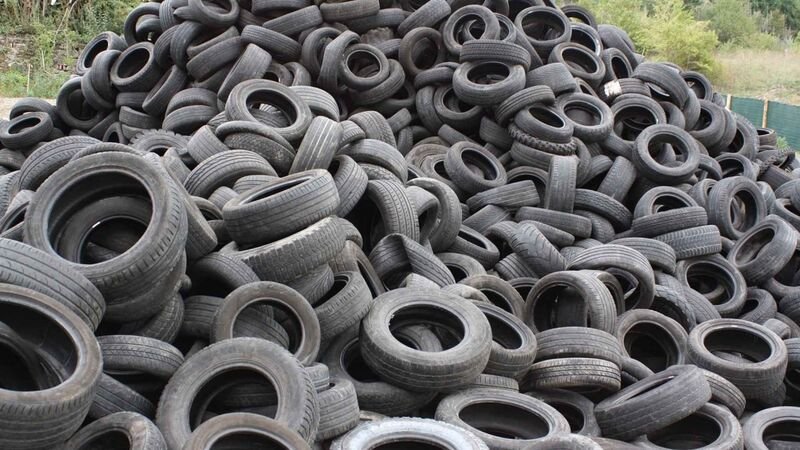
The Smooth Curb product page lists 100% recycled rubber for the ramp material. That statement describes material content. It does not document a particular recycling process, prove that the product was made from rubber sheets, or measure the emissions associated with production and delivery.
Used tires in the photograph illustrate a potential source of recovered rubber; the image is not documentation of Smooth Curb’s supply chain.
Recycled versus new rubber: what should you compare?
Recycled rubber uses recovered material; virgin rubber refers to new feedstock rather than recovered rubber. These labels describe material origin, not a complete performance rating. The EPA’s glossary of recycling terms explains the distinction between recovered content and virgin resources. Neither label establishes the best curb ramp for your entrance.
Compare products intended for the same use and check their dimensions, load specifications, installation requirements and warranty terms. For claims about grip, weather resistance or service life, ask for evidence about the actual product and conditions. Compare delivered prices for equivalent coverage, including any extensions or hardware. Do not assume that virgin rubber is always stronger or longer-lasting, or that recycled rubber is always cheaper. Assess environmental comparisons separately using the questions below.
Ask what an environmental comparison measures
The FTC’s Green Guides summary calls for specific, supported environmental claims. A recycled-content statement alone does not substantiate broad “eco-friendly” promises or a comparison with concrete, asphalt or new rubber.
For a carbon-footprint comparison, ask what products and service period were compared, which production, transportation, maintenance and disposal stages were counted, and what data supports the result. This article does not assign Smooth Curb a carbon reduction, energy saving or longer lifespan than another material.
Choose fit and intended use
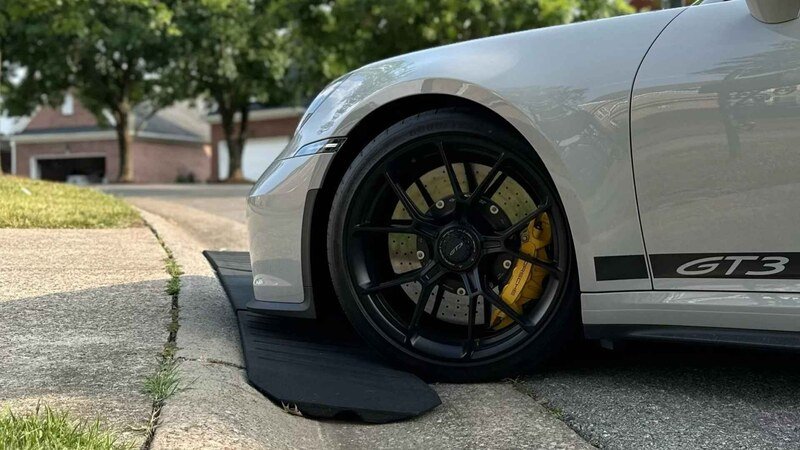
Smooth Curb is designed for compatible rolled driveway curbs. Its standard three-section kit spans 12 feet along the curb. Compare the curb profile and vehicle tire paths before purchase; the published load capacity does not mean every vehicle or entrance fits.
Use equipment designed for any separate loading-dock, vehicle-service or pedestrian-access task. Recycled material does not establish approval for those uses. Follow the installation instructions and arrange help handling heavy sections.
How a scrap tire becomes a ramp
Recycled tire rubber starts as crumb rubber. Whole tires are shredded, the steel belts are pulled out with magnets and the fabric is separated by air, and the remaining rubber is ground down either at room temperature in cracker mills and granulators or by freezing it with liquid nitrogen and shattering it. The result is screened into particle sizes; California’s definition of crumb rubber, for example, is granules no larger than a quarter inch. To make a ramp, that crumb is bound with a polyurethane or similar binder and molded under heat and pressure into a dense, heavy section. The same material goes into rubberized asphalt, molded mats and turf infill. The weight that makes a rubber ramp a two-person carry is the same property that keeps it in place under a turning tire.
How to check a “recycled rubber” claim
You cannot tell recycled content by smell, color or texture, and a recycling symbol on a listing proves nothing. What you can do is ask the seller, for the exact product, what percentage of the material is recycled and which components that applies to, and whether they have a material declaration, supplier traceability or a test report for it. A certificate should name the issuer, the standard, the product it covers and the date. Company-level claims and photos of tire piles do not substitute for product-level paperwork. Recycled content also does not by itself say anything about durability, traction or safety; those are separate questions with separate evidence. Smooth Curb lists 100% recycled rubber as its material specification; ask us for the supporting documentation if you want it, and treat that as a material statement rather than a third-party certification.
Plan care and eventual disposal
Keep the ramp and its water path clear, inspect the placement and connections, and ask Smooth Curb about damage or replacement parts. The 3-year limited warranty is a warranty term, not a prediction of service life or proof of resistance to every oil, fuel or chemical.
When a section eventually needs disposal, ask local waste services or a suitable processor whether they accept that exact molded rubber product. Recycled content and local recyclability are different questions; do not assume curbside collection accepts the ramp.
We highly recommend reading our blogs, such as “What Is a Driveway Curb Ramp? Fit, Uses and Limits” and “What are the Most Durable Curb Ramps Made From?“.